The Complete Guide to Construction and Engineering Pathways at School
If your child is interested in working with their hands, building things, or figuring out how machines work, there is a good chance a career in the trades is calling. Queensland's construction and engineering industries are growing fast, and the pathways to get started begin well before school ends. Blue Dog Training helps Queensland high school learners take their first steps toward a trade career through practical, nationally recognised qualifications delivered right at school.
This guide is written for parents and career advisors who want to understand the options. We cover everything from VET in Schools programs and school-based apprenticeships to government funding and what happens after Year 12. By the end, you will have a clear picture of the pathways available and how to help your young person choose the right one.
Want to explore the options with your young person? Read our online guide, available on the Blue Dog Training homepage, For Schools page, and our Engineering and Carpentry apprenticeship pages.
Key Takeaways: Trade Pathways at School
- Queensland high school learners in Years 10 to 12 can begin construction or engineering pathways while still at school.
- VET in Schools (VETiS) programs deliver nationally recognised Certificate II qualifications within the regular school timetable.
- School-based apprenticeships combine paid work, structured training, and secondary studies toward a Queensland Certificate of Education.
- Blue Dog Training partners with over 100 Queensland schools to deliver hands-on VETiS construction and engineering programs.
- Government funding through the Department of Trade, Employment and Training covers VETiS fees for eligible learners.
Why Are Trade Pathways at School Worth Considering?
Queensland is in the middle of a construction super-cycle. The state's construction pipeline is forecast to average around $69 billion annually through to 2032, driven by population growth, energy transition projects, and preparations for the Brisbane 2032 Olympic and Paralympic Games. According to an ABC News report on Construction Skills Queensland's Horizon 2032 analysis, the workforce shortfall is expected to peak at 35,000 in 2027 to 2028.
That means more apprenticeships, more jobs, and more demand for skilled workers across carpentry, fabrication, mechanical fitting, boilermaking, welding, and dozens of other trades. For parents and career advisors, this is not a someday conversation. The opportunity is real and it is here now.
Starting a trade pathway while still at school gives young people a head start. They build foundational skills, earn nationally recognised qualifications, and gain exposure to real industry environments before they leave Year 12.
What Is VET in Schools (VETiS)?
Vocational Education and Training in Schools, known as VETiS, allows Queensland school learners in Years 10, 11, and 12 to complete nationally recognised qualifications as part of their regular school timetable. The training is delivered by a Registered Training Organisation (RTO) that partners with the school.
VETiS programs are funded by the Queensland Government through the Department of Trade, Employment and Training (DTET). Eligible learners pay no fees for the funded program. The qualifications contribute up to four credits toward a Queensland Certificate of Education (QCE), and a Certificate III or higher can also contribute toward an Australian Tertiary Admission Rank (ATAR).
VETiS is not a watered-down version of trade training. It introduces real skills, real tools, and real industry expectations in a structured environment with qualified trainers. For many young people, it is the first time they experience what working in a trade actually looks and feels like.
Which VETiS Qualifications Are Available in Construction and Engineering?
Blue Dog Training delivers two VETiS qualifications specifically designed for school learners interested in the construction and engineering industries.
CPC20220 Certificate II in Construction Pathways
This qualification introduces learners to the primary construction trades, excluding plumbing. It covers core skills such as measuring and calculating, organising work, handling construction materials, and using carpentry tools and equipment. Learners who complete this qualification are prepared for apprenticeship entry into carpentry, bricklaying, wall and floor tiling, plastering, and painting and decorating.
As part of the program, learners can also complete the unit CPCWHS1001 Prepare to Work Safely in the Construction Industry, which results in the issue of a White Card. This means they can access construction work sites before they have even finished school.
MEM20422 Certificate II in Engineering Pathways
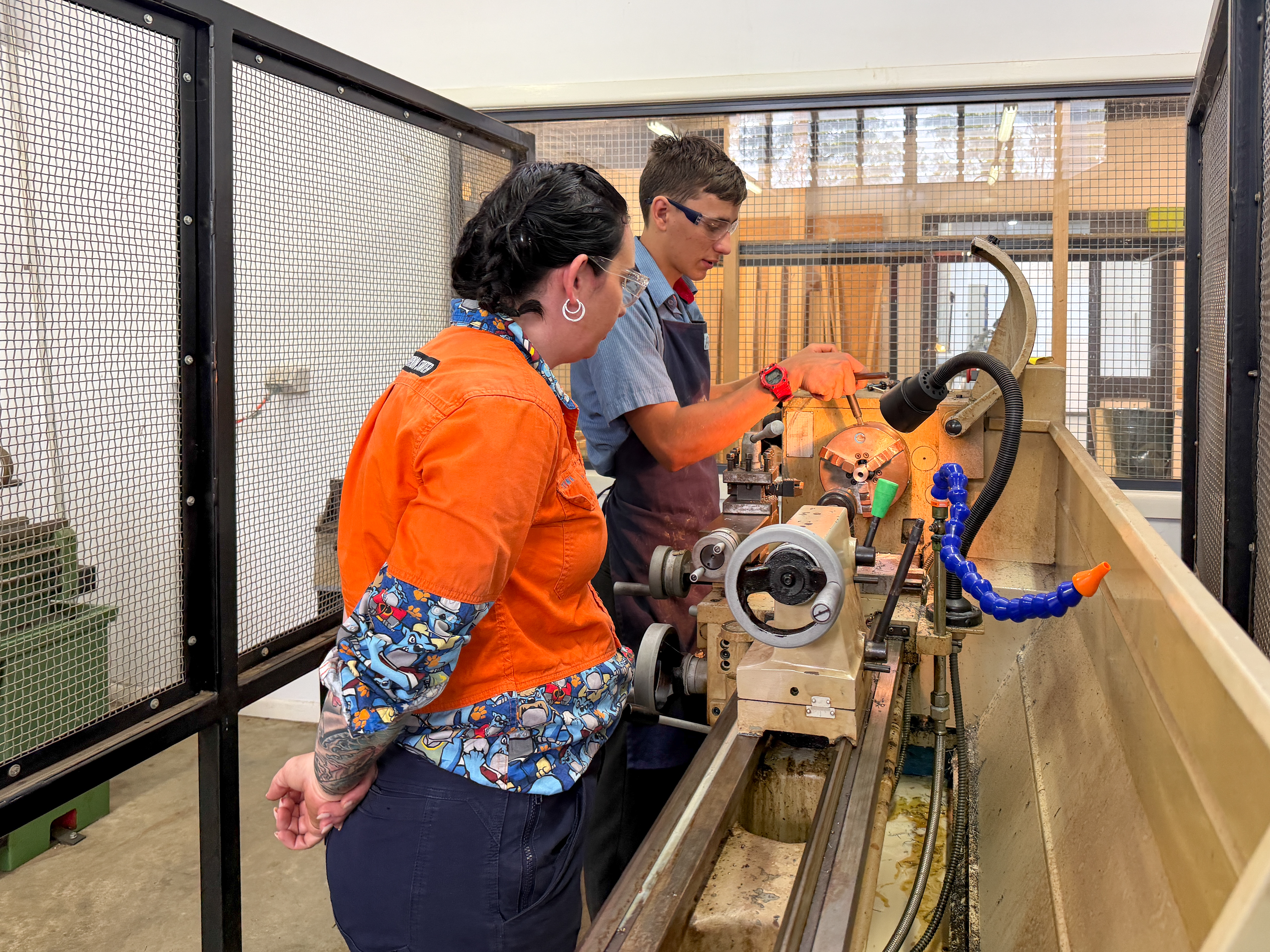
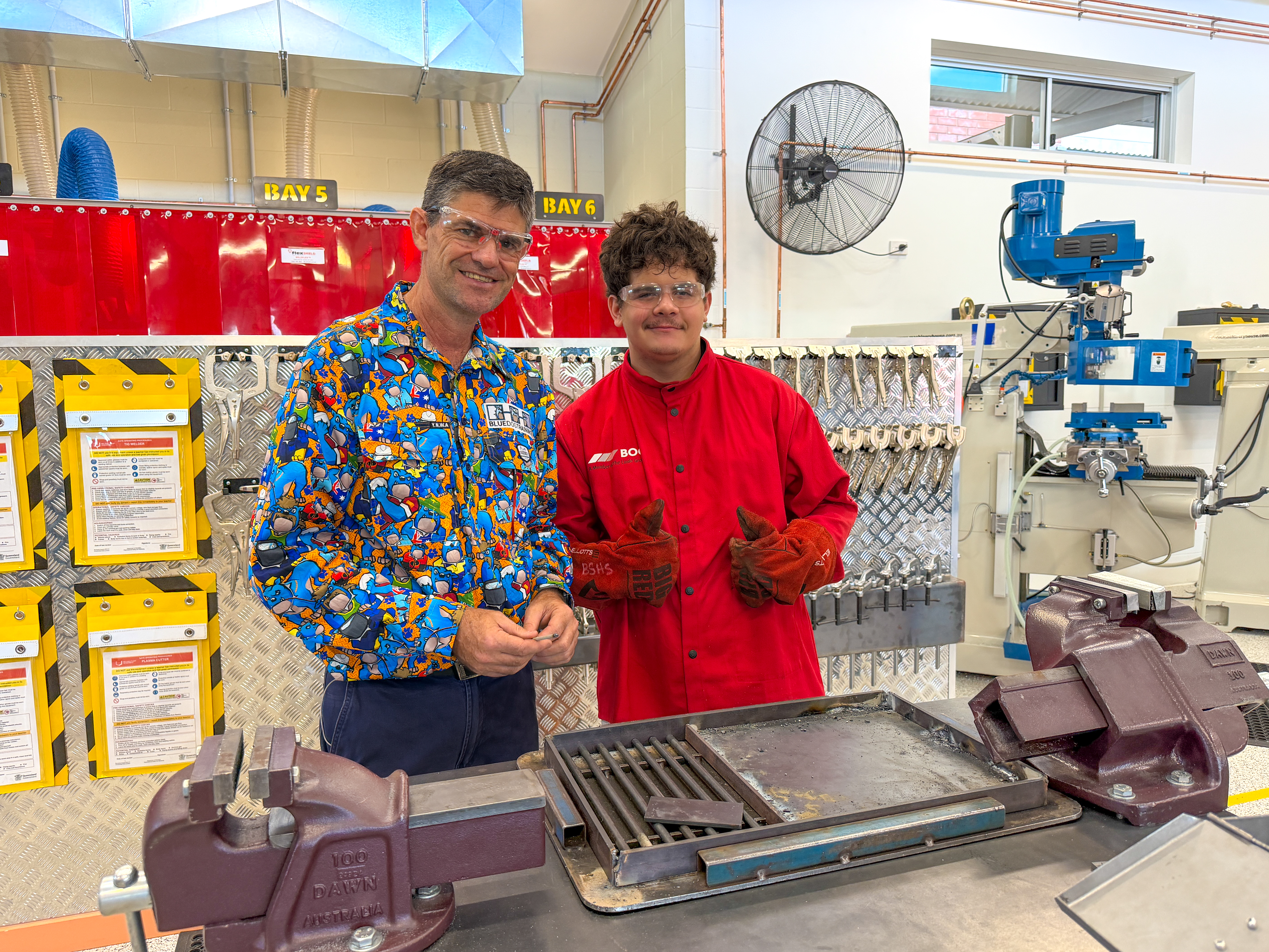
This qualification prepares learners for entry into engineering trades such as fitting, machining, boilermaking, welding, sheetmetal working, and diesel fitting. The program develops competency in skills necessary for entry into several engineering trade pathways and provides a strong foundation for a Certificate III apprenticeship.
Both qualifications contribute up to four QCE credits and are delivered face to face by Blue Dog Training's industry-experienced trainers and assessors at the school.
How Does Blue Dog Training Deliver VETiS at School?
Blue Dog Training partners with over 100 secondary schools across Queensland as the Registered Training Organisation responsible for all training, assessment, and qualification outcomes. A dedicated Blue Dog Training trainer and assessor attends each partner school on a structured and planned basis throughout the school year.
Theory is delivered through Blue Dog Training's interactive online Learning Management System (LMS), while practical projects and assessment activities are completed on site at the school's own workshop or facilities. This means learners are not pulled out of their regular timetable or sent off campus for training.
Schools also get access to 24/7 visibility of learner progress and reporting through the LMS. Blue Dog Training manages all record-keeping, assessment evidence, and compliance requirements in line with ASQA and DTET standards. The goal is to make it easy for schools to offer meaningful, work-ready qualifications without adding to their administrative workload.
What Are School-Based Apprenticeships and Traineeships?
A school-based apprenticeship or traineeship (SAT) is different from VETiS. With a SAT, a learner is employed by a real employer, earns a wage, and trains toward a nationally recognised qualification while continuing their secondary studies. The work and training hours are built into the school timetable so they count alongside regular subjects.
SATs are available in Years 10, 11, and 12 and require approval from the school, an employer willing to take on the apprentice, an Apprentice Connect Australia Provider to register the training contract, and a Registered Training Organisation like Blue Dog Training to deliver the training and assessment.
School-based apprenticeships are funded by the Queensland Government. Learners are exempt from student fees while they are still at school, and the employer receives the benefit of a motivated young worker who is building skills from day one.
How Do VETiS and School-Based Apprenticeships Differ?
Both pathways give learners a head start in the trades, but they work in different ways. Understanding the differences helps parents and advisors guide young people toward the option that suits them.
| Feature | VETiS | School-Based Apprenticeship |
|---|---|---|
| Employer required | No | Yes |
| Paid employment | No | Yes |
| Qualification level | Certificate II | Certificate III (or higher) |
| Delivered at school | Yes | Combination of school, workplace, and RTO |
| QCE contribution | Up to 4 credits | Up to 8 credits |
| ATAR contribution | Not directly (Certificate II level) | Possible (Certificate III or higher) |
| Duration | Typically 2 years at school | 2 years at school, then continues post-school for typically 3 more years |
VETiS is ideal for learners who want to explore the trades before committing to a specific employer or career direction. School-based apprenticeships suit learners who have already identified a trade and an employer and want to get started on their formal apprenticeship early.
What Happens After Year 12?
Completing a VETiS qualification or school-based apprenticeship does not lock a young person into one direction. It opens doors. Learners who complete a Certificate II through VETiS with Blue Dog Training carry core units of competency that are common to many Certificate III trade qualifications. This means they can receive credit toward further training when they start a full apprenticeship.
Common post-school pathways include starting a full-time carpentry apprenticeship or one of several engineering apprenticeship specialisations, including fabrication, mechanical fitting, boilermaking, welding, sheetmetal working, and diesel fitting.
Blue Dog Training also runs a Pathways to Apprenticeships program that connects work-ready VETiS graduates directly with employers looking for apprentices. Employers receive learner profiles matched to their business needs, and the learner gets a genuine pathway from school into paid work and further qualifications.
How Is Government Funding Structured for Trade Pathways?
Understanding funding can feel complicated, but the basic structure is straightforward. The Queensland Government funds trade pathways at different stages through different programs. Funding eligibility applies.
VETiS Funding
The Department of Trade, Employment and Training (DTET) funds one VETiS qualification per learner while they are enrolled at school. This means the learner pays no fees for the funded program. It is important to choose carefully, because each learner only gets one funded VETiS qualification. More information is available on the Blue Dog Training funding page.
Career Start Program
After leaving school, apprentices can access subsidised training through the Career Start program. This program supports new entrants with foundation and entry-level training in areas aligned with job opportunities and industry demand. Construction and engineering apprenticeships are included.
Free Apprenticeships for Under 25s
The Queensland Government currently offers fee-free apprenticeships for eligible Queenslanders under 25 who commence or recommence an approved apprenticeship. This means a young person who completes VETiS at school and then starts a full-time carpentry or engineering apprenticeship with Blue Dog Training may pay no co-contribution fees at all.
What Should Parents and Career Advisors Look for in a Training Provider?
Choosing the right training partner makes a real difference to the learner's experience and outcomes. Here are the things that matter most.
First, check that the provider is a Registered Training Organisation with current scope to deliver the qualifications they are offering. Blue Dog Training holds RTO status and is approved to deliver VETiS programs across Queensland, from the Gold Coast to Far North Queensland.
Second, look at the trainers. Are they qualified tradespeople with real industry backgrounds, or are they delivering from textbooks? Blue Dog Training's trainers are tradespeople first. They have worked in the industries they teach, and that makes a difference in how learners engage with the training.
Third, ask about the pathway beyond the qualification. A good provider does not just deliver training and walk away. Blue Dog Training actively supports learners in finding apprenticeship opportunities after school through the Pathways to Apprenticeships program and strong employer relationships across Queensland.
What Trades Can a School Leaver Enter in Queensland?
A Certificate II in Construction Pathways opens the door to apprenticeships in carpentry, bricklaying, wall and floor tiling, plastering, and painting and decorating. A Certificate II in Engineering Pathways supports entry into mechanical fitting, fabrication, boilermaking, welding, sheetmetal working, and diesel fitting.
Beyond those entry points, further qualifications lead to specialised roles and supervisory positions. Blue Dog Training offers a range of post-apprenticeship qualifications, including Certificate IV in Building and Construction and QBCC Managerial Course, which support tradies looking to move into site supervision or start their own business.
The construction and engineering industries offer long-term career growth. A qualified tradie can progress from apprentice to leading hand, supervisor, project manager, or business owner. The skills are portable, nationally recognised, and in strong demand right across Australia.
How to Get Started: A Step-by-Step Guide for Parents and Advisors
Getting a young person onto a trade pathway does not require a complicated plan. Here is a simple sequence that works.
Step 1: Have the Conversation Early
Talk to your young person about what interests them. Do they enjoy hands-on work? Are they curious about how things are built? Career conversations work when they start from genuine interest rather than external pressure.
Step 2: Speak with the School's VET Coordinator or Career Advisor
Every Queensland secondary school has someone responsible for vocational education pathways. Ask what VETiS programs are available, whether the school partners with a Registered Training Organisation for construction or engineering, and how the timetable accommodates trade training.
Step 3: Explore VETiS Programs
If the school partners with Blue Dog Training, the learner can enrol in a Certificate II in Construction Pathways or Certificate II in Engineering Pathways. The Blue Dog Training schools page has information for both schools and parents.
Step 4: Consider a School-Based Apprenticeship
If the learner already has an employer in mind, or if the school can help connect them with one, a school-based apprenticeship lets them start earning and training toward a Certificate III while still completing Year 12.
Step 5: Plan the Post-School Pathway
Whether the learner starts with VETiS or a SAT, plan for what comes next. Blue Dog Training's Pathways to Apprenticeships program connects VETiS graduates with employers, and the Career Start funding program supports apprentices after they leave school.
Common Questions Parents and Career Advisors Ask
Parents and career advisors often have similar concerns when it comes to trade pathways. Here are the questions we hear most, along with clear answers.
Will My Child Miss Too Much School?
VETiS programs delivered by Blue Dog Training run within the regular school timetable. Learners attend their VETiS sessions alongside their other subjects, so they are not pulled away from their secondary studies or required to attend training off campus.
Is VETiS the Same as Dropping Out of School?
Not at all. VETiS is part of the school curriculum. Learners continue working toward their QCE while completing a nationally recognised trade qualification. They finish Year 12 with both their school results and a vocational qualification in hand.
Does VETiS Affect My Child's ATAR?
A Certificate II completed through VETiS does not contribute directly to an ATAR. However, one VET qualification at Certificate III level or higher, when combined with four General subjects, can contribute to an ATAR. School-based apprenticeships that lead to a Certificate III may be relevant here.
In Conclusion: How Trade Pathways at School Set Young Queenslanders Up for Real Careers
Queensland's construction and engineering industries need skilled workers, and the pathways to meet that demand start at school. VETiS programs and school-based apprenticeships give young people the chance to explore the trades, build real skills, and earn qualifications that carry genuine weight with employers.
Blue Dog Training's approach is grounded in practical, industry-led training delivered by tradespeople who know the job. With partnerships across more than 100 schools, a clear Pathways to Apprenticeships program, and access to government-funded qualifications, Blue Dog Training makes it easier for parents, career advisors, and learners to turn an interest in the trades into a real career.
The best time to start the conversation is now. Talk to your school's VET coordinator, explore what is available, and take that first step. The opportunity is real, the support is there, and the future in the trades has never looked stronger.
FAQs About Trade Pathways at School in Queensland
What age can a learner start a VETiS program in Queensland?
Queensland learners can start a VETiS program from Year 10. Blue Dog Training delivers construction and engineering VETiS programs across the state, giving learners hands-on trade exposure and nationally recognised qualifications before they leave school.
Does a VETiS qualification count toward a QCE?
Yes. A VETiS qualification can contribute up to four credits toward a Queensland Certificate of Education. Blue Dog Training's Certificate II in Construction Pathways and Certificate II in Engineering Pathways both qualify for QCE credit.
Can my child get a White Card through VETiS?
Yes. Blue Dog Training's Certificate II in Construction Pathways includes the unit CPCWHS1001 Prepare to Work Safely in the Construction Industry, which leads to a White Card upon successful completion. This allows learners to access construction work sites.
What is the Pathways to Apprenticeships program?
Blue Dog Training's Pathways to Apprenticeships program connects work-ready VETiS graduates with employers seeking apprentices. Employers receive matched learner profiles, and learners get a direct route from school into a paid apprenticeship with ongoing training support.
Is VETiS funded by the Queensland Government?
Yes. The Department of Trade, Employment and Training (DTET) funds one VETiS qualification per learner while enrolled at school. Eligible learners pay no fees for the program. Blue Dog Training is an approved Skills Assure Supplier for VETiS delivery across Queensland.
What careers can my child pursue after completing VETiS?
After completing a Certificate II through VETiS, learners can enter apprenticeships in trades such as carpentry, boilermaking, welding, fabrication, mechanical fitting, and diesel fitting. Blue Dog Training supports this transition through its Pathways to Apprenticeships program and funded apprenticeship training under the Career Start program.